Pop-Up Screen or Regular Venue? Choosing a Setting for One Evening
Compare a pop-up screen with a regular venue and choose the setting that suits your audience, access needs and the kind of evening you want to create.
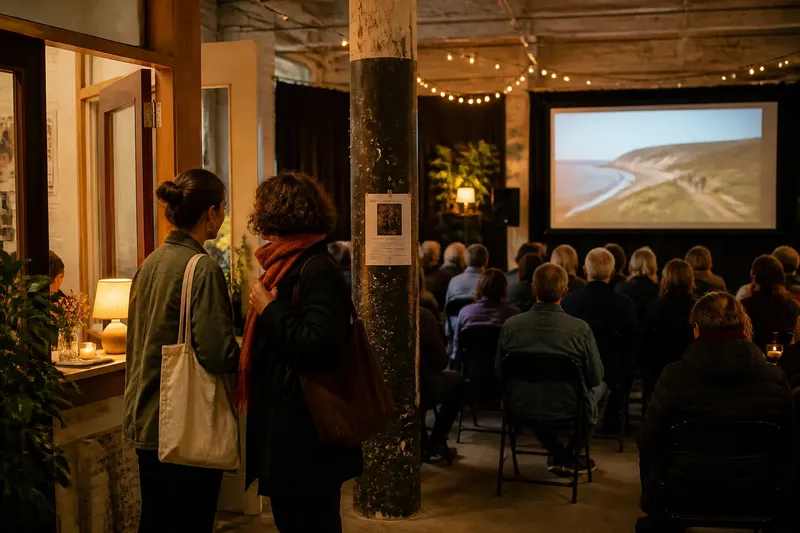
The common mistake when choosing between a pop-up screen and a regular venue is to treat the room as a backdrop, then discover that its quirks shape the whole evening. A pop-up screening space may bring a striking sense of occasion but demand more coordination; a familiar venue can make arrival feel effortless while carrying expectations of its own. The right choice depends on the gathering you want, not on which room sounds more exciting.
What does the room invite people to do?
A venue sends a message before the film begins. A village hall, library room or community arts space can make a screening feel like a gathering made by local people for local people. A regular independent cinema may feel more like an evening out, with a recognised entrance, a ticket desk and a clear transition from street to screen.
Neither mood is inherently better. Ask what you want the audience to feel comfortable doing. Should people arrive in small groups and find neighbours? Is the event meant to feel like a special one-off, or like an accessible part of the area’s regular cultural life? The room can encourage one kind of behaviour, but it cannot manufacture a welcoming atmosphere on its own.
Think about the threshold. In a pop-up location, a friendly volunteer at the door, a visible sign and a clearly marked route to the seating can help newcomers understand that they are in the right place. In a regular venue, those signals may already be familiar to returning guests, though a first-time visitor still benefits from a warm welcome.
Choose the room whose natural character supports the evening, rather than asking it to pretend to be somewhere else.
When is a pop-up screen the stronger choice?
A temporary screening space can make the location part of the invitation. A converted shop, a community centre, a covered outdoor space or a room in a local museum may connect the film to a place people already know for another reason. That connection can make a one-off event feel rooted in its neighbourhood, even if the audience has never attended a screening there before.
Pop-ups also offer flexibility. The host can arrange chairs in a loose arc, leave room for prams, or create a small reception area that suits the event. A less formal layout may help people mingle before the film, while a more theatre-like arrangement can keep attention on the screen. The useful question is not whether the room is unusual; it is whether its layout and access support the audience you hope to welcome.
That flexibility comes with practical decisions. The organiser must establish how people enter, where coats go, whether the room can be darkened, and where the screen and speakers can be placed without obstructing a route through the space. Check the sightlines from the back and edges, not only from the middle. A screen that appears generous when the room is empty can become hard to see once people sit down.
Imagine a local group planning a one-off film night in a library meeting room. They arrange seating in rows, then realise the room’s central pillar blocks part of the screen. Moving the chairs into two shorter banks may restore clear views and leave a route through the room; the expected result is a layout in which guests can settle without craning around the obstruction. The group should still confirm its equipment and access arrangements with the venue before making the plan.
A pop-up is often a good fit when the sense of discovery, neighbourhood connection or adaptable layout matters more than the convenience of familiar screening facilities. It is less appealing if the organising team has little capacity to coordinate the room and its practical details.
What does a regular venue make easier?
A familiar venue can remove friction from the audience’s evening. People may know where the entrance is, how to reach the seating and whom to ask for help. A cinema or established arts venue may already have staff, a ticketing routine, seating designed around a screen, and a clear process for admitting guests. Those arrangements can free organisers to concentrate on the film and the welcome.
Comfort matters in quiet ways. A proper foyer gives early arrivals somewhere to wait without standing in the screening room. Fixed seating can make it easier to settle in, and a venue’s usual signs can help people orient themselves. Familiarity can also encourage repeat attendance: guests who had a straightforward first visit have fewer unknowns to weigh before coming back.
But regular venues have their own character, and sometimes their own constraints. A space designed for conventional cinema can make a community gathering feel more formal than intended. Its usual schedule, room layout or front-of-house practices may leave less room for informal arrivals or a flexible seating plan. Ask which parts of the venue’s routine are helpful and which might work against the particular event.
Consider whether the audience includes people who have never been to a film society or independent cinema. Familiar branding may reassure some visitors; others may assume the venue is not for them. A direct event description, clear booking information and an identifiable contact person can help bridge that gap without changing the venue itself.
A regular venue tends to suit events where predictability, established facilities and a simple arrival experience matter most. It can be especially helpful when the organising group wants to host screenings repeatedly and build a recognisable home for them.
How should access and convenience shape the choice?
Convenience is not just a short journey. It includes finding the entrance, understanding how to book, getting inside comfortably, and knowing where to go once there. A central, well-known venue may still be awkward for someone who needs step-free access if the accessible entrance is difficult to identify. A pop-up in a familiar public building may feel easier for local residents, but only if the route and opening arrangements are clear.
Before deciding, look at the journey from the guest’s point of view:
- Can someone identify the correct entrance from the street?
- Are the event time, address and arrival instructions clear on the invitation?
- Can guests reach the screening room without having to guess where to go?
- Is there a comfortable place to wait if they arrive before the doors open?
- Can the seating arrangement leave a clear route for people who need it?
- Is there a named contact for access questions before the event?
For access requirements, the particular building and its arrangements matter. Confirm relevant details directly with the venue and communicate them plainly, rather than relying on assumptions about what a space offers.
Also consider how people will leave. A screening that finishes after nearby services have closed may feel less convenient than its location suggests. You need not solve every transport issue, but an accurate end time and straightforward directions to the exit or local transport can help guests make an informed choice.
Which setting suits the gathering you want?
Think of the decision as a choice between three useful approaches: a temporary room with a strong local connection, a regular venue with established routines, or a familiar community space used in a new way. That third option can be a helpful middle ground. A community hall that hosts regular events, for example, may feel accessible to local residents while giving organisers a stable relationship with the site.
A temporary room suits a gathering that benefits from surprise, a sense of place or a deliberately informal feel. A regular screening venue suits an event where dependable facilities and an established audience experience take priority. A familiar community space may suit a group that wants local ease without the extra uncertainty of a wholly new site.
To choose, write down what the evening needs to make possible. Is it easy arrival, an unusual atmosphere, flexible seating, a repeatable arrangement, or a connection to a particular neighbourhood? Mark the needs that are essential, then compare each available space against them. If one venue offers a memorable setting but makes arrival confusing, ask whether clear signs and a host at the entrance could address the problem. If not, the atmosphere may not be worth the cost in effort.
Keep the comparison concrete. Walk through the audience’s likely route: arriving, finding the door, entering the room, choosing a seat, watching, and leaving. A venue that works well at every point is usually a stronger choice than one that wins only on its first impression.
What should you ask before confirming a venue?
Before you commit, have a conversation with the person responsible for the space. Ask about the room’s normal use, what can be moved, who will open and close it, and what equipment is available. For a regular venue, clarify which staff or facilities are included in the booking. For a pop-up, establish what the organiser needs to bring and which practical arrangements the host can support.
It is also sensible to confirm the event’s operational details, including permission to use the space for a screening, the agreed timings and any conditions attached to the booking. Requirements can depend on the venue, equipment and local rules, so follow the venue’s instructions and seek qualified advice if a specific issue needs it.
Make a simple written note of agreed responsibilities. It need not become a complicated production plan: a clear record of who has access, what the room provides and who handles audience questions can prevent crossed wires later.
How do you decide between a pop-up screen and a regular venue?
Is a pop-up screening space harder to organise?
It can involve more coordination because the room may not have a screening setup or established audience routine. A clear plan for access, layout, equipment and arrival can make those responsibilities easier to see before the event is announced.
Does a familiar venue make a screening feel less special?
Not necessarily. A known setting can help people relax and return, while the film choice, welcome and details of the evening create a distinct occasion. If the room feels too formal, consider whether a warmer arrival or a less rigid seating arrangement is possible.
What matters most when comparing audience access?
Consider the whole visit, from finding the entrance to leaving after the film. Ask the venue about the specific access arrangements, then give guests clear information so they can judge whether the space suits their needs.
Can a small group host a screening in a non-cinema room?
It may be possible if the venue permits the event and the room can support the audience, screen and sound arrangement. Confirm the space’s conditions and practical provisions before inviting people, rather than assuming an available room is ready for a screening.
The best choice is the one that makes the intended gathering feel possible without asking the audience to solve avoidable puzzles. A pop-up screen can bring a place into the event; a regular venue can make the evening easier to enter and repeat. For a pop-up screen or regular venue, the deciding detail is often the route from the street to a comfortable seat—and whether the room helps guests feel they belong there.